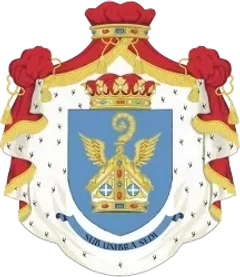
Coat of arms of the Principality of Sabourg Sabourg Principality

Seven Centuries

From the fortified castle to the abbatial state

The long refusal to disappear. Since 1261, the Principality has declared itself a sovereign enclave, governed by monastic tradition and defended by its own account of history.

The Four Ages

The ages of Sabourg

before 1261

Castrum Sepulchri

The lands that became the Principality were known first as the Castrum Sepulchri — a fortified stronghold guarding the Ligurian heights above Ventimiglia. The castle stood for centuries, an outpost of ecclesiastical and temporal authority, before monks assumed its governance.

1261 – 1729

The Abbatial Principality

By charter in the year of grace 1261, the monks received governance of the lands — Seborga, Sospel, and Ventimiglia — and established what the Principality holds to be the first monastic state in human history. For more than four centuries and a half, the abbots ruled not as kings, but as the spiritual and temporal guardians of a unified commonwealth, answering to Rome and to their monastic vows.

This era marks the true birth of the Principality, a unique experiment in governance where sacred and secular authority were not merely united but indistinguishable.

1730 – 1946

The Savoy Protectorate

In 1729, at a moment of economic strain, the principality was transferred to the House of Savoy with papal approval, with a crucial condition: the transfer was conditioned upon the settlement of debts owed to creditors, notably the Republic of Genoa. The Principality maintains that these debts were never discharged, and therefore the sale was held to be null and void by its own accounting.

Nonetheless, the lands passed under Savoy protection and remained so until 1946; the lands of the historic principality are today administered by the Italian Republic. The Principality contests neither the historical fact of this administration nor the legitimacy of Italy's current de facto governance, but asserts its own claim to sovereignty throughout this period.

1946 – today

Legitimation

From 1946 onward, the lands of historic Seborga have been administered by the Italian state. The Principality, however, has not ceased to declare itself a sovereign entity, maintaining its own institutions, its Prince-Abbot, and its claim to independent statehood. It pursues, by its own declaration, recognition among the nations of the world.

This era is marked by the Principality's conscious effort to legitimize its standing in the modern international order — through the UN Charter subscription, requests to Italy for special autonomy, and the vision of a union of micro-states united in common voice and common cause.

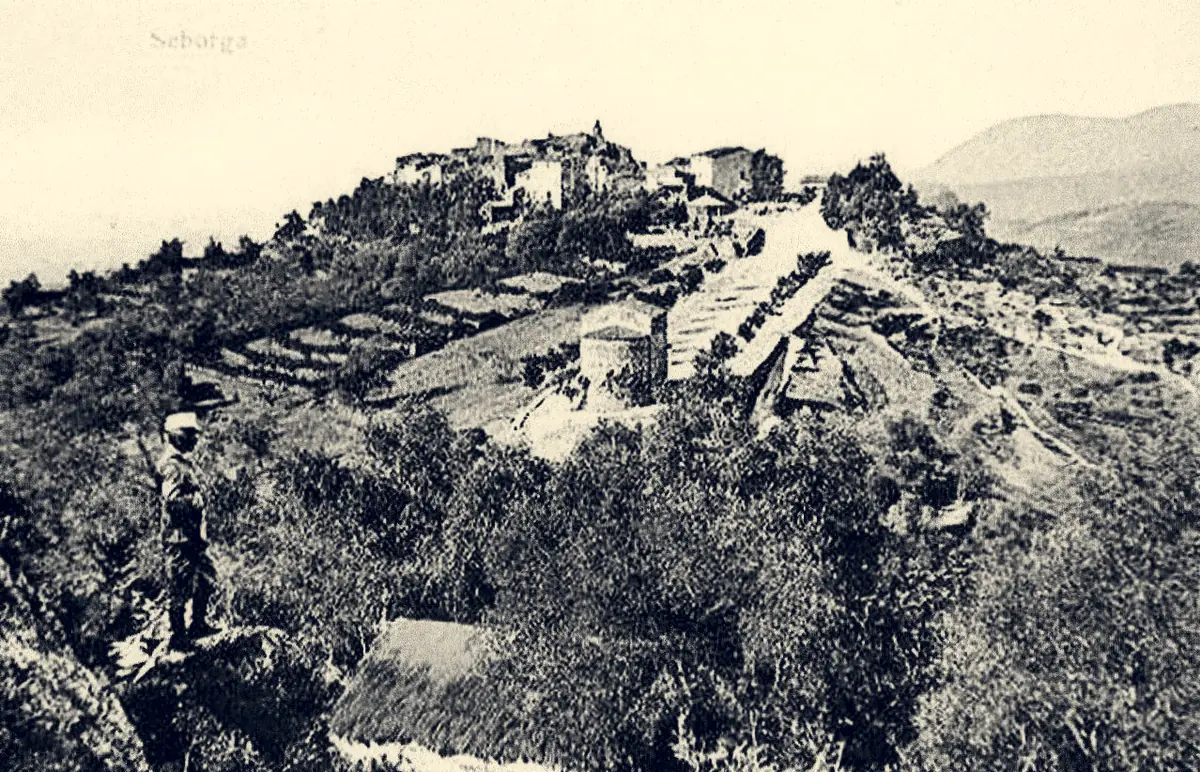
A view of Seborga rising on its Ligurian ridge above the terraces
Castrum Sepulchri Seborga, upon the Ligurian heights

Clarification

False myths and contested accounts

Over seven and a half centuries, many popular narratives have grown around the Principality of Sabourg. Some are true; some are contested; some are tales that have taken on a life of their own in popular media and casual tourism.

The Principality's own historical account, sourced from its chancery records, monastic archives, and diplomatic correspondence, differs in important ways from narratives that have circulated in outsider accounts. Rather than enumerate every disputed point, we offer this principle:

Any claim regarding the Principality's history, legitimacy, or standing that contradicts the sources held by the Principality itself — or that attributes to it declarations it has not made — reflects a competing narrative, not established fact.

The Principality does not deny that its legitimacy is contested. Indeed, the fact of contestation is itself part of its story. For those seeking the Principality's own account of disputed points — whether regarding its treaty history, its standing under international law, or the interpretation of specific historical events — the chancery welcomes direct inquiry.

Contact the chancery

The Principality's Declaration

Sovereignty and the modern state

The Principality of Sabourg declares itself a sovereign state. This declaration is not dependent upon recognition by other states, nor upon the United Nations, nor upon any external body. It rests upon:

  • Continuous governance — An unbroken succession of sovereigns since 1261.
  • Institutional apparatus — A functioning state structure comprising councils, ministries, and a chancery.
  • Temporal authority — The exercise of governmental and judicial functions within its recognized domain.
  • International engagement — Diplomatic communications, treaties, and formal requests addressed to other states and international bodies.
  • Distinctive legal identity — Laws, customs, and constitutional traditions unique to the Principality.

That the Principality's territory is now administered by the Italian Republic does not negate its claim to sovereignty. The Principality asserts that it holds a "sovereign enclave without territorial possession" — a legal status without modern parallel, but one for which it seeks international recognition.
Explore the institutions of the state